












What Everyone Ought to Know About Crib Safety Standards
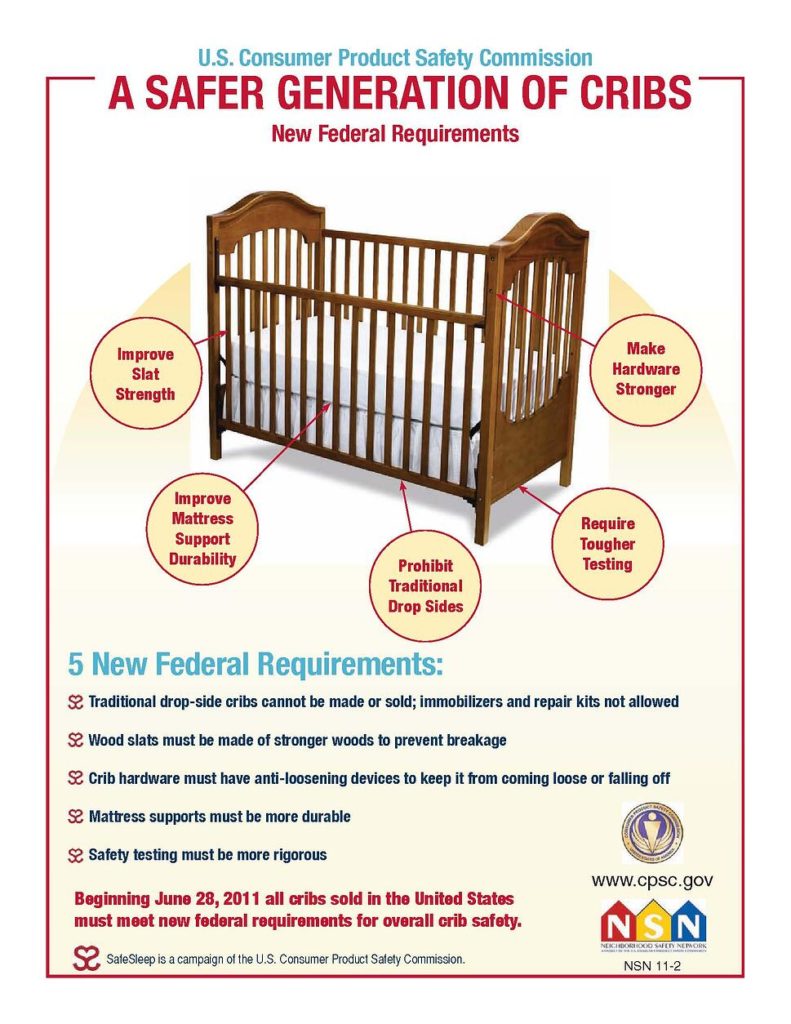
For contract healthcare facilities that serve infants and youth, the end of 2012 marked the beginning of the US Consumer Product Safety Commissions’ (CPSC) new crib safety standards.
All cribs in use in the United States are now required to be compliant with the new Standards 16 CFR 1219 and 16 CFR 1220. Cribs manufactured after July 28, 2011 were constructed to meet the new standards but any crib manufactured prior to that key date likely requires replacement.
These wide-sweeping regulatory changes mean that child care and health care providers across the country should have replaced existing cribs by 12/31/2012 although it is believed that many facilities did not voluntarily comply – likely because of the high cost of replacing quantities of cribs. States’ Attorneys General have the authority to inspect and enforce the new standards.
-
- Most notably, the new standards eliminate ay drop side rail cribs. Drop side rails have been available on cribs for decades and had been considered an industry standard. Care providers whno have become used to the convenience of the drop side rail to facilitate reaching in for infants and toddlers can be assured that new models can include hinged access panels or adjustable height mattresses.
- Additional standards upgrades include heavy, more durable hardware; thicker, stronger slats; and heavier mattress supports.
- Here is a quick reference highlighting the compliance changes: (see crib safety diagram)
The most reliable way to check for crib compliance on existing cribs:
- ...is to look at the date of manufacture which is typically affixed to the underside of the crib frame. Cribs manufactured after 07/28/11 should be compliant since the CPSC heavily enforced compliance by US manufacturers and retailers.
- No drop side rail cribs are permissible so if you are working with drop side cribs you can be assured your cribs do not meet new standards.
- Also, decorative elements are no longer acceptable so any cribs with any adornments are not compliant.
- Other features like stronger slats and mattress supports are not easily distinguished so date of manufacture or a copy of your cribs’ compliance certificates might be the best way to determine whether or not your crib needs replacing.
When considering replacing existing cribs in your facility, always work with a reputable contract furniture seller who can give you the right information on compliance standards. Compliant cribs include portable, folding, wood and metal options and costs are relatively reasonable.
9 Crib Safety Standards to Check in Your Facility

A crib can look sturdy and still have problems that deserve attention. Use these checks as part of your facility's regular crib review.
1. Do Not Use Traditional Drop-Side Cribs
Traditional drop-side cribs are one of the biggest warning signs when reviewing older inventory.
Federal crib requirements introduced in 2011 ended the manufacture and sale of traditional drop-side cribs because failures involving rails and hardware could create dangerous gaps.
Simply immobilizing or repairing an older drop-side mechanism does not automatically make the crib compliant with current requirements.
2. Check the Spacing Between Crib Slats
Crib slats should be spaced no more than 2 3/8 inches apart.
Spacing beyond that limit can create an entrapment hazard. Slats should also be complete and free from cracks or other damage.
When inspecting a crib, check the entire rail rather than measuring only one area.
3. Inspect Screws, Brackets, and Other Hardware
A compliant crib still becomes unsafe if parts loosen, break, disappear, or are installed incorrectly.
Look for:
- Missing screws or bolts
- Loose brackets
- Damaged fasteners
- Improperly installed components
- Broken mattress-support hardware
- Replacement parts that were not designed for that crib
Staff should follow the manufacturer's assembly and maintenance instructions rather than improvising repairs.
For facilities purchasing other high-use furnishings, our guide to key healthcare furniture features explains why construction and maintenance details deserve close attention.
4. Look for Hazardous Corner Posts
The CPSC advises that corner posts should not extend more than 1/16 inch above the crib end panels unless the design meets an applicable exception.
A protruding post can catch clothing or other material.
This is especially worth checking on older decorative cribs that may have finials, knobs, or raised corner pieces.
5. Avoid Dangerous Cutouts
Headboards and footboards should not contain openings that could trap an infant's head.
Decorative styling by itself is not the problem. The concern is whether the design creates an opening or projection capable of creating a hazard.
That distinction is important when evaluating an older crib.
6. Use a Firm, Tight-Fitting Mattress
A crib mattress should fit closely inside the crib.
Large gaps between the mattress and crib frame can create an entrapment risk. The mattress should also provide a firm sleep surface rather than a soft or heavily cushioned one.
For full-size cribs, CPSC guidance identifies a mattress size of at least 27 1/4 inches by 51 1/4 inches and no more than 6 inches thick.
Always confirm the mattress requirements in the crib manufacturer's instructions because the crib and mattress need to work together as a safe system.
7. Check the Mattress Support
Do not focus only on the visible rails.
The platform or support underneath the mattress also needs to remain secure and structurally sound. Older standards were strengthened partly because mattress-support failures had created safety concerns.
Check supports for:
- Bending
- Cracking
- Missing hardware
- Loose attachments
- Damage around adjustment points
If the mattress height can be adjusted, make sure the support is locked correctly at the selected position.
8. Confirm the Crib Has Been Assembled Correctly
Incorrect assembly can introduce gaps or weak connections even when every individual crib component meets the required standard.
Follow the original manufacturer's instructions and use the correct hardware.
If instructions or important parts are missing, contact the manufacturer before placing the crib back into service.
9. Check for Product Recalls
A manufacture date does not replace a recall check.
Facilities should periodically review current CPSC recall information, especially when maintaining older crib inventory or acquiring used equipment.
Product registration information can also help manufacturers notify owners about recalls or other safety information.
How Can You Tell Whether an Older Crib Meets Current Standards?
Start with the tracking label, registration information, and manufacture date.
For child care enforcement purposes, CPSC guidance generally presumes cribs manufactured on or after June 28, 2011 comply with the federal crib standards. Older cribs require closer documentation review.
If a crib was made before that date, a Children's Product Certificate or qualifying third-party test documentation may help demonstrate compliance.
Do not rely only on appearance.
Features such as stronger slats, more durable hardware, and improved mattress supports are not always easy to verify visually. A receipt alone is also not considered proof that a crib complies with the applicable standard.
When documentation is unavailable, contact the manufacturer before assuming the crib is suitable for continued institutional use.
What About Cribs Manufactured Before 2011?
An older crib is not automatically proven unsafe solely because of its age, but facilities should not assume that it meets today's requirements.
Pay particular attention to the following:
- Drop-side mechanisms
- Missing tracking labels
- Unknown replacement parts
- Damaged slats
- Loose hardware
- Unverified mattress supports
- Excessive corner posts
- Hazardous decorative openings
- Missing compliance documentation
For many facilities, replacing a questionable crib can be more practical than trying to verify the history and certification of an older product.
A Compliant Crib Still Needs a Safe Sleep Setup
Meeting structural crib safety standards does not automatically make every sleep setup safe.
For infants, CPSC safe-sleep guidance recommends a firm, flat sleep surface and placing the baby on their back. The sleep area should remain clear of soft objects that can create suffocation or entrapment risks.
Keep items such as these out of the crib:
- Pillows
- Quilts
- Comforters
- Bumper pads
- Stuffed toys
- Loose bedding
- Sleep-positioning products not intended for the crib
A tight-fitting fitted sheet designed for the mattress should be used.
CPSC's current safe-sleep guidance summarizes the principle simply: a crib, bassinet, or play yard should remain essentially bare apart from the fitted sheet.
When Should the Crib Mattress Height Be Lowered?
Many modern cribs allow the mattress support to be positioned at different heights.
A higher mattress level may be practical for a young infant who cannot sit or pull up. As the child develops greater mobility, the mattress should be lowered according to the manufacturer's instructions.
This helps reduce the risk of a growing child climbing or falling over the rail.
Facilities caring for children at different developmental stages should include mattress-height checks in room turnover procedures.
Should Facilities Buy or Use Second-Hand Cribs?
Used cribs require additional caution.
Before placing one into service, verify:
- Its manufacturer and model information.
- Whether it meets the applicable federal standard.
- Whether it has been recalled.
- Whether all original components are present.
- Whether replacement hardware is manufacturer-approved.
- Whether the crib can be assembled exactly as instructed.
- Whether slats, supports, rails, and hardware are undamaged.
- Whether a compatible mattress fits correctly.
An inexpensive used crib can become a poor value if its history, components, or compliance cannot be confirmed.
A Practical Crib Safety Checklist for Facility Staff
Regular inspections can help catch wear or missing parts before they become larger concerns.
| Check | What Staff Should Review |
|---|---|
| Manufacture information | Tracking label, model, manufacturer |
| Recall status | Check current CPSC recall information |
| Rails | No drop-side mechanism or structural damage |
| Slats | No cracks, missing slats, or excessive spacing |
| Hardware | No loose, missing, broken, or incorrect parts |
| Mattress | Firm, correct size, snug fit |
| Mattress support | Secure and free from damage |
| Corner posts | No hazardous projections |
| Headboard/footboard | No hazardous openings |
| Assembly | Matches manufacturer instructions |
| Sleep space | Fitted sheet only; remove soft objects |
| Maintenance | Document inspections and repairs |
This checklist does not replace manufacturer instructions or applicable regulatory requirements, but it can give staff a consistent way to identify issues requiring further review.
Crib Safety Standards for Child Care and Healthcare Facilities

Institutional crib use deserves extra attention because the same crib may be used repeatedly and by multiple children.
Facilities should consider creating a written inspection process that covers:
- Initial installation
- Room turnover
- Scheduled maintenance
- Hardware tightening
- Mattress inspection
- Recall checks
- Cleaning
- Replacement-part control
- Documentation of damage
- Removal of questionable equipment from service
Furniture used in high-use environments can experience wear differently from furnishings in a private home.
Our construction details resource can also help facility purchasing teams understand why construction methods matter when selecting furnishings for repeated institutional use.
Common Crib Safety Mistakes to Avoid
Assuming a New-Looking Crib Is Compliant
Appearance does not establish compliance. Check the model, manufacture date, labels, instructions, and documentation.
Keeping a Drop-Side Crib Because the Rail Still Works
A functioning drop-side mechanism does not make the design acceptable under current federal standards.
Replacing Missing Hardware With Generic Parts
Bolts, brackets, screws, and other hardware affect the crib's structural performance. Use manufacturer-approved replacement components.
Using a Mattress That Leaves a Noticeable Gap
Even a high-quality mattress can be unsafe if it is incompatible with the crib.
Adding Padding to Make the Crib “More Comfortable”
Soft items can introduce suffocation and entrapment hazards. For infants, a firm surface and clear sleep space are safer.
Forgetting About Recalls After Purchase
Safety review should continue throughout the crib's service life.
Conclusion
Following current crib safety standards helps facilities create safer sleep environments for infants while reducing risks linked to outdated designs, damaged hardware, poor mattress fit, and improper crib setup. Regular inspections, recall checks, correct assembly, and proper mattress selection should all be part of routine crib management.
For child care, healthcare, and other institutional settings, crib safety should remain an ongoing responsibility rather than a one-time purchasing decision. If your facility is reviewing or replacing furniture, Furniture Concepts can help you explore durable options suited to high-use environments and your operational needs.
Contact Furniture Concepts to discuss your facility furniture requirements or request a quote.
Frequently Asked Questions
What year did the current federal crib safety standards take effect?
The strengthened federal standards for full-size and non-full-size cribs became effective on June 28, 2011. Child care facilities, family child care homes, and certain places of public accommodation had until December 28, 2012, to place compliant cribs into use.
Are drop-side cribs legal to use?
Traditional drop-side cribs do not meet the strengthened federal standards that took effect in 2011. Facilities should not rely on an old drop-side crib simply because the mechanism still appears functional.
How far apart can crib slats be?
CPSC guidance states that crib slats should be no more than 2 3/8 inches apart.
How should a crib mattress fit?
The mattress should be firm and fit tightly enough that an infant cannot become trapped between the mattress and crib sides.
Can a facility use a crib made before 2011?
Older cribs require careful verification. Facilities should review compliance documentation, product labeling, the manufacturer's information, condition, assembly, and recall history rather than assuming the crib complies.
What should be inside an infant's crib?
For safe sleep, keep the crib clear of pillows, bumper pads, stuffed toys, quilts, loose blankets, and similar soft objects. Use a firm mattress with a fitted sheet and follow current safe-sleep guidance.